Showing posts with label Gilles Larrain. Show all posts

Monday, November 14, 2011

5 Minutes with Louda Larrain


Louda came to Paris from Moscow in 1996 with admiration and curiosity for French culture. With diplomas in hand from the Fine Arts School for gifted children in Omsk (Russia) and from Moscow Institute of Technology, she arrived full of ideas and with a few swatches of hand made fabrics, which were the result of her research in developing new textile techniques.

Miracles happened… Louda receives a telephone call:” Karl Lagerfeld went crazy about your fabrics”. Chanel Couture becomes her first client! Then followed artistic collaborations with Christian Dior, Christian Lacroix, Thierry Mugler, Emanuel Ungaro, Gianfranco Ferre, Leonard, Cerruti, Jean-Charles de Castelbajac, Torrente, Luis Feraud and etc.

The next miracle happened in New York in 2002. She was shopping at Bergdorf Goodman wearing a Louda jacket when she was noticed. Now Bergdorf Goodman was buying Louda’s clothes. Neiman Marcus came next. America stimulates her to create and produce more and more for the Louda label. She loves it! She works on each piece as if it were a painting. They are all one of a kind, timeless, never out of date, out of touch, out of fashion and always evolving.

Since 2006 Louda lives in New York working on various artistic projects.

In June 2009 Louda’s creations became an instant happening installation at the Temple of Dendur in the Egyptian wing of the Metropolitan Museum of Art in New York City.

International exhibitions of Louda art-to-wear in2008 and 2010 in Sanlitun Village and “Zhongguancun” in Beijing (China), 2010 in Seoul Art Center (Korea) and in Atrium City Hall in Den Haag (Netherlands)., West Lake Expo in Hanfzhou (China) in 2011.
And her first one-woman show will take place in Ginza (Tokyo) in 2013.


Q1: What was the first piece of music that you owned and loved?

Louda: You know I am very influenced in this case in my taste in music, when I go through life I let myself be influenced by whatever is in my life. At the beginning my father, who played the trumpet, so he loved very much the classical jazz which was Armstrong, Dina Washington and the music from the 1920’s and 30’s…Western jazz, classical jazz, at the beginning when jazz was merging into the establishment. Then I moved on and was influenced by my husband who loved all these British hard rock groups…Deep Purple, Led Zeppelin, Black Sabbath and so I would follow all this. Ian Gillan, I remember loving Deep Purple, because all the concerts were so different. We had all these CD’s, all the recordings from the concerts, even how the voice of young Gillan would change through the years. There was a song ‘Child In Time’, he was young and then alter on. Then my son, and it was Marilyn Manson and then the group with the masks…Slipknot, and then it went into such dark areas that I could not follow him. Then I moved to New York and then it was tango and flamenco and , well there’s always Tom Waits…Tom Waits forever.

Q2: Your fabric technique, the way you create fabric is very unique. It’s very difficult in this age to be making something entirely new. How did you create that technique?

Louda: Thank you for the compliment. When I was a little girl a gypsy read my palm and said that I have incredible capacity to create new things. It implanted into my brain and so I am trying to prove it is true. The technique just came…it was channeled to me and I just execute it. It is very simple and every piece I make, I love. This is something that people can feel. For example I grew up in Siberia and there was a very poor museum and so I didn’t have the capacity to see original art, so all my education come from books and reproductions. When you see the real artwork, compared to the reproductions the contrast is so tremendous and I think that because artists react a lot to the energy. When artists work we charge the objects with our energy. The technique is part of it, or course but it is more about what the artist feels. I do most of these things myself and when I created designs for Chanel and Dior and Lacroix and many incredible houses and when I look at my archive I can see that what I am doing now is more interesting because I challenge myself and want to go further.

Q3. You had an interesting journey from Russia to Paris and then in New York. Was it planned?

Louda: Let me tell you one thing about Russia. At the communist time your goal, without realizing, was to escape. When I came to Paris this was my first time abroad. I was like, “Oh my gosh”. I went to Paris in November and it was beautiful. I just could not leave after spending a month in Paris. I lived in Paris for 10 years-it took me time to learn French and it took me 3 years before I could tell a story. Luckily my son who was 6 when we moved, he was my best teacher. He learned so fast.

In Russia it was the period of explosion of culture in the early 90’s. All the underground artists came out. Underground music and film…was suddenly available in Russia and after 2 or 3 years it became just about making money. It became so sad.

By 2000 the fashion world of haute couture started to change. There were so few houses left. Big houses shifted, before they would order production from me. By 2000 everything shifted to India and China and they wanted to produce my fabric overseas. Sometimes they would keep the sample and produce it without telling me. What I did for couture would be introduced into t-shirts. So after a few cases like this I stopped showing.
Jean-Charles de Castelbajac

In 2002 I came to New York for the first time I was stopped in the street by people asking where I got the clothes I was wearing. I was asked by a woman at Roberto Cavalli in Bergdorf Goodman, where did I get my clothes. I told her they were my designs and she said “Our buyer is going to call you”. So for a year I was selling in the Artisan section in Bergdorf Goodman. I then received an order from Neiman Marcus and that took all my time. I had a very small collection and I have to say a big thank you to their buyer for the trust they showed. I would love to work with them again on unique pieces because they are amazing stores.

Q4: I want to ask about your teddy bears-how did that project happen?

Louda: Every thing happens in a weird way. There was a kidrobot sale and they had bears that were only $5.00 and I thought what can I do with these? So I created one, and then another one. They started as being just decorative and then I wanted them to become a message. Teddy bears are so important to humanity. They have something to do with the idea of an ‘imaginary friend’. My son had an imaginary dog and we would have to answer my son in the voice of the dog for years.

They are crocheted, embroidered in a small format. The life I have now in New York with Gilles, there are constant photo shoots, someone is always staying at the studio, so the work is more fragmented. So we can have dinners for 5 hours and I can be sitting here working on my bears. It is so enjoyable and not seasonal like clothing.

Christian Lacroix

Q5: Do you think that for you the exhibition process is a good way to work. The show in Japan and the Steven Kasher show. Do you think that’s a better way to work than a fashion show?

Louda: Both are very good-the exhibition is good because it is there for a while. The fashion show is theatre, a fashion show as a medium is a fascinating thing, it’s something I would like to pursue and learn. It’s a fascinating medium. If I can have a fashion show once a year I would be very happy. I would like to do it on a smaller scale. You interact with people- the models and so on. It is also very stressful…a very short period and all the unpredictable things that happen during a show. An exhibition is much calmer. It is very good to bring work out of the studio and I am so lucky to have my designs photographed by Gilles Larrain.

THE HOUSE OF LOUDA:
Post-Couture Textile Paintings and Revamped Umbrella Dress Sculptures

Exhibition: November 2 - December 10, 2011
Reception: November 2, 6-8pm

In the back room of Steven Kasher Gallery, coinciding with our Gilles Larrain: Idols exhibition, Louda Larrain will create her inaugural art installation, her "inner sanctum." It will feature deconstructed textile paintings dressing the walls, in addition to a bas-relief of textile sculpture in the form of toys, heads, female and male body parts and other indescribable surprises.

http://www.loudacollection.com/

Monday, October 31, 2011

The 360 Degree View of Gilles Larrain


Gilles Larrain was born in Dalat, Indochina, in 1938 to a Chilean father, who was a diplomat and painter, and a French-Vietnamese mother, who was a pianist and painter. His father was Hernan Larrain, at that time consul of Chile in Indochina, and Charlotte Mayer-Blanchy, granddaughter of Saïgon’s first mayor Paul Blanchy. He was also the nephew of cardinal of Talca (Chile) Rafaël Larrain. He was educated at New York University and at the Ecole Nationale des Beaux-Arts in Paris where he studied architecture and worked in city planning.

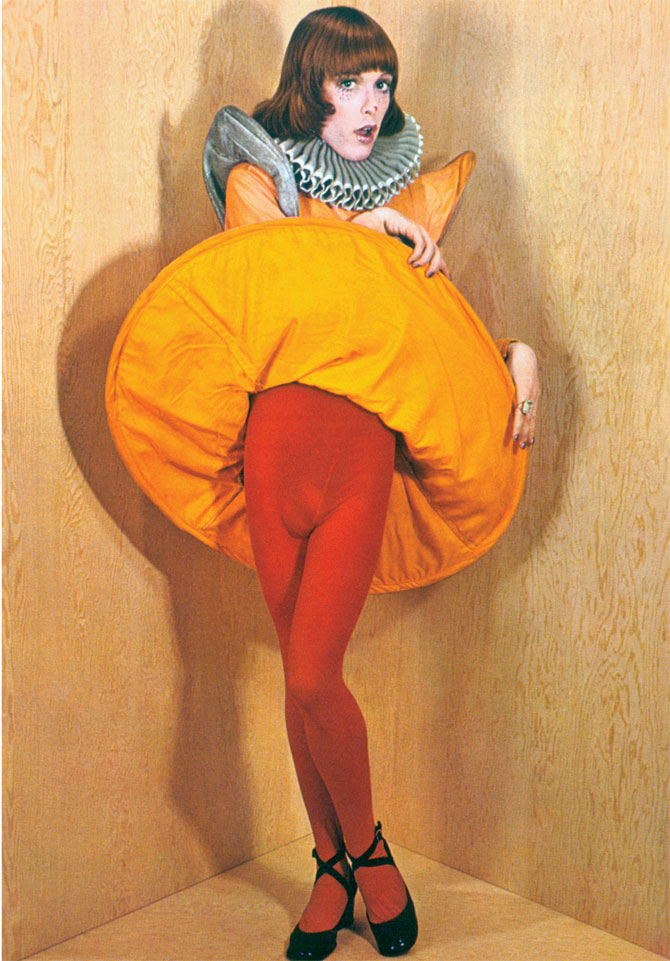
Since 1969, Larrain has devoted his energies to photography and has concentrated specifically on portraiture. In 1973 he published the highly successful photographic book 'Idols', which presented portraits of transvestites. Larrain sees portraiture as a way to “capture the landscape of the soul of a person”. His subjects have ranged from dancers to musicians, artists, celebrities and friends.

Q1. You mentioned playing flamenco guitar. What was the music that inspired you?

GL: Well first my love in music was Bach, I used those records so much there was almost no sound in the groove and of course I love the music of the middle ages. When the sun comes up at the beginning of the day you can see the light coming up, that is what the music of the middle ages is all about, Gregorian Chant. And then I went to Spain in 1959/60 when I was a kid and I met Carmen Amaya. I went to a party in the South of Spain and there was a party and La Chunga (Micaela Flores Amaya), was dancing, Sabicas was there and it was so powerful that music and so erotic.


GL: La Chunga was dancing and it was very hot, in the morning and you didn’t want to go to bed. She was dancing and she had beautiful breasts, she had a very thin silk thing and she’s dancing bare feet. Virus, that’s it. That’s what happened. So all this Presley thing that was happening in New York, looked very tame to me. Without passion because it was about passion and truth. Not about glitter, posturing or pretending. ‘I’m The Great Pretender’, it was about the raw, like the blues you know, the raw power of the human aroma. You cannot censor a bullet when it fires. It will censor when it goes through something. That was the virus that caught me. Everybody is influenced by The Beatles and of course it is fantastic. When I was shooting ‘Idols’ at the time, I put continuously ‘Imagine’ by John Lennon. Imagine the people, no religion, no frontier, freedom, freedom.
Q2. When you found all these characters for ‘Idols’ for example, were they people that you knew or found on your travels and did you get the feeling that you were capturing an iconic moment?

GL: All my life my sense of curiosity has been there. I had to adapt when I was transplanted and transported and integrated in different cultures, I had to learn the language. You become like a microscope enlarging everything…so my second wife, I’m a collector, this is my forth wife, I collect friends. Each has our own idiosyncratic behavior, what am I? I am nothing, I am a sponge. So when Christine was working at Max’s Kansas City I used to go pick her up there and Mickey Ruskin, the owner, became a friend. All the artists who went there were fed by him, never having pay. However when they had a fire in the kitchen at Max's every artist brought pieces for a couple of auctions to get money for Mickey to start Max's again, because we all needed a place to go, a water hole to go and drink. It was like the jungle-the place was always active, complex, obscure. An Amazing place.

I saw the back room, the Warhol room. There was neon lights of Dan Flavin, The Cockettes came one day and I said ‘Wow!’ I met John Noble, Taylor Mead and we became friends. After one came to my studio, everybody came. So it was like a Salon. Once a week we had a photo session, for a couple of years. We have more than 17,000 Koda chromes. What we have at the Steven Kasher show is just the tip of the iceberg. So that’s how it happened. It’s a snowball that comes down the mountain....‘Brrrrrrrrrr’ getting bigger! The snowball is also like the fishing net that grabs everything in the sea. I was living and I was enjoying it. I have no concern about Avant Garde, rear Garde, middle Garde, no Garde, I have no box. I don't live in a box.

What I saw is that when I was showing my photos to ‘straight’ people, my clients, was that they were very very mad at me. “Why are you photographing these deviant sick people?” I got letters of insult. 1970/71, those were not like now in fashion, it was really under ground. Don’t go there. That’s sinful. You scare people because the frontier has been broken, like illegal immigration. The French have a saying: “The habit makes the monk”. If you wear the monk’s habit you become a monk. If you dress like this, that is what you were. Eveyone wants to be put in boxes. Like a submarine-It is in compartments. Why? Because if a torpedo pierces one part they can close it. It is about safety. That is why the metaphor of a submarine is a good one. Everything is cut in slices so if something gets flooded the others don’t. That is the mentality of society.

I did a book in 1973, a small book called ‘Idols’. Made by a music publishing company, cheap pages, cheap glue, like a magazine. But that book became like an icon thing. Ryan McGinley, a young upcoming dynamic guy, he knows about global communication, He writes for Vice magazine. Ryan called and said "I would like to interview you" and we talked. Shooting the breeze...and the article came out and it was everywhere. Then Steven Kasher called me and said he would be interested in some vintage prints for a show of Max’s Kansas City. So it’s natural flow. Those subjects are done 40 years ago and they are still quite authentic and contemporary. They’re not out of fashion in a way because they are not a fashion thing. It’s a fun creative moment. It’s like tableaus, not about selling underwear. And it is influencing fashion again. You look at that girl with the silk dress. You look at the pants and it could be now and it is 40 years ago.

Q3. You’ve a big affinity with many iconic musicians…Miles Davis, New York Dolls, Sting, Billy Joel.

GL: I enjoyed making the backdrops, which I did for the American Ballet theatre catalogue also. The entire catalogue was done in one week. The backdrops in those photographs are painted on canvas. 89 dancers came to my studio and in order to make the backdrop I put ropes, very thick construction ropes on the floor. I wet the canvas with a light glue that acted as a primer and with bare feet I stamped on the canvas to make the impression of the ropes. It became almost 3D. A friend of mine is a big mathematician in France. Developing The Concorde was part of his mathematical theory and he has interesting theories regarding knots. The Gordian Knot for instance.

I also painted the background for the portrait of Sting for his ‘Bring On The Night’ film. We had a meeting with him, we had lunch at the restaurant the day before the shoot and He said I just came from the Caribbean and the new record is ‘The Dream If The Blue Turtles’” and he said “I love the water, I was diving” and he had a blue jacket. I said ‘ok, I have an entire night to make a backdrop’. And he came with that jacket here. No art director, no designer, no make up. He came with about 30 people, production, and I said to him “Sting we cannot work like that. Just you and I”. I love music, it’s about the music, not the photography. Photography is just the tool, you know.

Q4. What about the creativity and the internet. That kind of human exchange doesn’t happen online…

GL: It’s messaging. It is not touching the skin so what is it?. It’s very informative. You have an idea you can send it. Thanks to the internet that Egypt…Tunisia happened. It’s like, we used to ride horses now we ride planes-Technology is progressing. But humanly, the mind, the intellect is not progressing. So we take it for granted that everything can be solved with technology. But you can not get creativity in a package.

Sometimes you get information which is not totally right. In this book it said that my mother was a chemist, but my mother was a pianist, she was never a chemist but it is written there so people say Gilles mother is a chemist so he is a scientific guy that’s why there is chemistry in the dark room. So it is misinformation. So even that information is not correct. But if you read three different books, three different papers you see three different things. You realize the planet is not flat….you can think flatly because they have been informed that way. Curiosity is a wide angle lens. Creativity is like the eye of the fly. A fly has 36,000 facets to the eye. The fly can see 360 degrees everywhere. The fly can fly upside down. No helicopter can do that. That little monster , little thing the fly is the most incredible technical thing as a creation it is fantastic. That kind of vision is creativity.

Q5. You work very fast…

GL: When I work yes. We have a friend, she’s an amazing collector and she commissioned a painting and it took me five years to do it-she was mad at me. I said “I am not Domino Pizza, I don’t deliver on time!”I am the guru of patience.

The gumption and the desire to be free from structures that limit your creativity. Like deliver on time and produce for the gallery…you have to be very lucky to survive like that. How do you survive for 72 years in life doing what you love, and loving what you do. And that’s it. Not compromising. It is very fucking lucky to be there. I am .

We have an Iranian vase in our bedroom that is 4000 years old. I look at it I am connected to my family who were collectors of Chinese, Greek, African antiquities. My father was friends with Picasso and Braque and he was also very affected by African art. It's real, like the sap of the tree and it is connected to the beauty of life.

I studied architecture in the 1960's and we went to see the Paleolithic cave paintings at Lascaux in southwestern France. As an architectural student you could go to the real caves at that time. The caves are now closed to the public because the paintings were becoming damaged over time, from visitors touching them. For me it was so powerful to see the real paintings, there were no art dealers, no collectors at that time, there were no galleries either. Why did they paint these images, with blood, bone marrow, with blue berries? Pure human expression.

These paintings are not a canvas, they're on the walls, which are undulating, following the stone formation. When the light hits the walls from different angles it is almost like animation. You could work with a low emission carbon flashlight and see that they were almost moving, it was the most amazing thing. 30,000 years ago. That’s the spirit, you see. Not many people have seen that. These are my roots. I go back to roots, always. They paintings are so beautiful, the light, the way they move. To be that lucky to see that.

Gilles Larrain: Idols & The House Of Louda
Exhibition November 2nd - December 23rd
Steven Kasher Gallery, 521 W. 23rd Street, New York City.
http://www.stevenkasher.com


http://www.gilleslarrain.com/
http://www.loudacollection.com/